
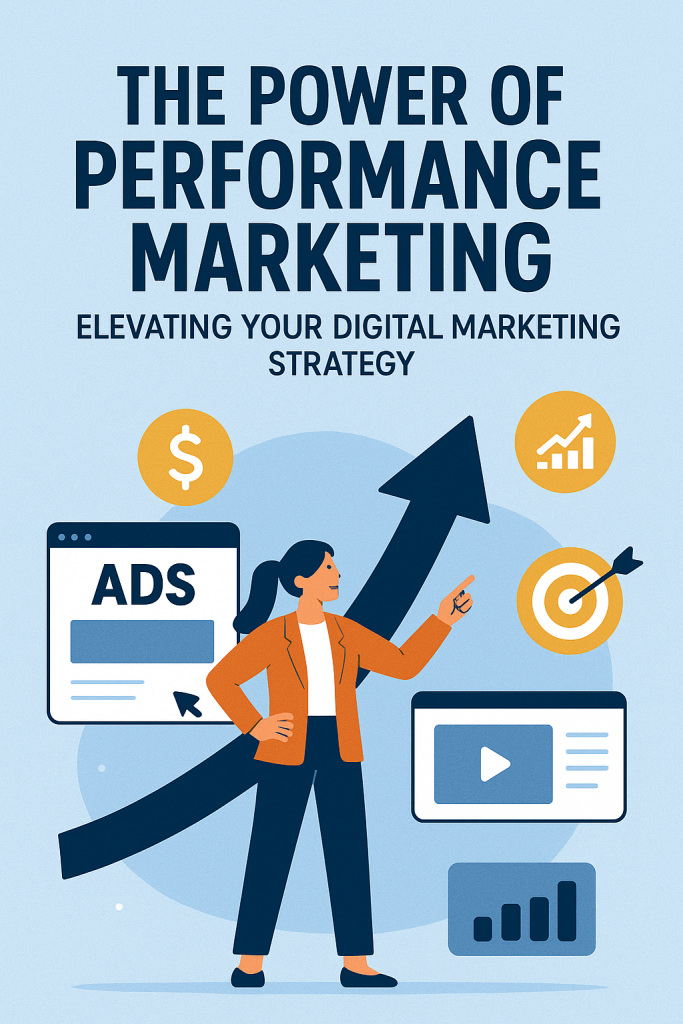
In today’s fast-paced digital world, every brand wants more than just online visibility—they want measurable results. As businesses compete for attention across social media, search engines, and online platforms, performance marketing has emerged as one of the most powerful strategies for achieving scalable growth. Unlike traditional marketing, where success is often difficult to quantify, performance marketing focuses on results-driven campaigns that allow brands to track, measure, and optimize every step of their customer journey.
In this blog, we will explore the true power of performance marketing and how it can elevate your digital marketing strategy to new heights.
What Is Performance Marketing?
Performance marketing is a data-driven approach that focuses on measurable outcomes such as clicks, leads, app installs, website visits, or sales. Instead of paying for impressions or estimated reach, brands only pay when a specific action is completed. This makes performance marketing one of the most cost-efficient and ROI-focused advertising models.
Popular Performance Marketing Channels Include:
-
Google Ads (Search, Display, Shopping)
-
Meta Ads (Facebook & Instagram)
-
YouTube Ads
-
LinkedIn Ads
-
Affiliate Marketing
-
Influencer Performance Campaigns
-
Native Ads & Programmatic Advertising
Performance marketing combines creativity, analytics, technology, and data insights to deliver campaigns that drive tangible business results.
Why Performance Marketing Matters in Today’s Digital Landscape
1. It Delivers Measurable Results
In traditional marketing, brands might spend heavily without knowing which campaigns worked. Performance marketing eliminates that guesswork. Every click, impression, and conversion is tracked using tools like:
-
Google Analytics
-
Meta Ads Manager
-
Google Tag Manager
-
CRM & Lead Tracking Software
This transparency allows businesses to understand what’s driving performance and where to invest more.
2. High ROI and Cost Efficiency
Since you only pay for results, performance marketing is extremely budget-friendly. Whether your goal is leads or sales, you know exactly where your money is going. Smart targeting and retargeting ensure you’re only reaching people likely to convert.
3. Advanced Targeting and Audience Segmentation
Performance marketing gives brands the power to target audiences based on:
-
Location
-
Age & demographics
-
Interests & behaviors
-
Website visits
-
App activities
-
Past purchases
This laser-focused targeting increases conversion rates and reduces wasted ad spend.
4. Real-Time Optimization
One of the greatest strengths of performance marketing is the ability to optimize campaigns in real time. If a specific ad, keyword, or audience isn’t performing well, it can be adjusted instantly. A/B testing helps refine creatives, landing pages, and strategies to maximize performance.
5. Scalability
Performance marketing lets businesses scale campaigns based on outcomes. Once a profitable campaign is identified, budgets can be increased to maximize results. This scalability makes it ideal for startups, growing brands, and large enterprises.
How Performance Marketing Elevates Overall Digital Strategy
Performance marketing isn’t just an advertising method—it’s a strategic advantage. When integrated correctly, it enhances your entire digital ecosystem:
1. Strengthens Brand Visibility
Even though performance marketing focuses on results, it indirectly boosts brand visibility through ads, impressions, and content exposure. High-performing ads also improve brand recall, trust, and credibility.
2. Improves Website and Landing Page Quality
Performance marketers constantly test and optimize landing pages to improve conversion rates. This improves:
-
Page speed
-
User experience (UX)
-
Mobile responsiveness
-
Content quality
A strong landing page not only boosts ad performance but also elevates your overall website quality.
3. Enhances Customer Journey Mapping
Performance marketing allows businesses to understand how users behave at every stage:
-
Awareness
-
Consideration
-
Conversion
-
Retention
These insights help brands create better funnels, remarketing strategies, and customer engagement plans.
4. Supports Long-Term Growth
While traditional marketing builds brand awareness, performance marketing generates immediate results. When combined, they create a balanced digital strategy that supports both long-term branding and short-term revenue goals.
Key Strategies to Maximize Your Performance Marketing Results
1. Create High-Quality, Engaging Creatives
Visuals play a crucial role in attracting attention. Ensure your ads include:
-
Clear headlines
-
Strong CTAs
-
High-resolution images or videos
-
Consistent branding
Video ads, especially short-form content, perform exceptionally well across platforms.
2. Leverage Retargeting
Retargeting allows you to re-engage people who visited your website or interacted with your ads but didn’t convert. This is one of the highest-performing techniques in digital marketing and often delivers the lowest cost per lead (CPL).
3. Use Data and Analytics as Your Core Driver
Analyze your:
-
CPC (Cost Per Click)
-
CTR (Click-Through Rate)
-
Conversion Rate
-
ROI / ROAS
-
Customer Acquisition Cost (CAC)
Data-driven decisions lead to smarter campaigns and lower costs.
4. Focus on Landing Page Optimization
A powerful ad is useless if the landing page doesn’t convert. Improve:
-
Headline clarity
-
Page speed
-
Trust elements (testimonials, badges)
-
CTA placement
-
Overall mobile experience
5. Test Everything
The secret to high-performing campaigns is continuous testing:
-
Different audiences
-
Multiple ad copies
-
Creatives (images/videos)
-
Offers & CTAs
-
Landing pages
Small changes can deliver massive improvements.
Future Trends in Performance Marketing
1. AI-Powered Campaign Optimization
AI is revolutionizing performance marketing by:
-
Automating bidding
-
Enhancing targeting
-
Predicting user behavior
-
Personalizing content
Platforms like Google and Meta already use machine learning to deliver optimal results.
2. Shift Toward Privacy-Focused Advertising
With privacy updates like iOS 14 and Google’s cookie phase-out, marketers must depend more on:
-
First-party data
-
CRM audiences
-
Server-side tracking
3. Rise of Performance-Based Influencer Marketing
Brands are moving away from fixed influencer fees and toward performance-based payouts such as:
-
Pay per sale
-
Pay per lead
-
Pay per click
4. Growth of Short Video Ads
Short-form video platforms like Instagram Reels, YouTube Shorts, and TikTok (where available) are dominating user attention and generating higher engagement.
Final Thoughts
Performance marketing has undoubtedly transformed the digital marketing landscape. Its ability to deliver measurable, scalable, and cost-effective results makes it an essential strategy for any modern business. Whether your goal is lead generation, brand awareness, app installs, or revenue growth, performance marketing provides the precision and power needed to achieve sustainable success.
By combining creativity, data, and smart optimization, businesses can elevate their entire digital strategy and stay ahead in a competitive online world.
If you’re ready to unlock the full potential of your brand, performance marketing is the pathway to measurable and impactful growth.
If you want, I can also create:
✅ SEO Title + Meta Description
✅ Blog Banner Image
✅ Social Media Caption for this Blog
Just tell me!